
- Creating and Publishing a Form
- Instant Forms
- Conversational Form
- Create Multi Step Forms In WordPress
- Using Calculations in SureForms: A Step-by-Step Guide
- Calculation Formula Guide
- SureForms Login Block – Step-by-Step Guide
- SureForms Registration Block – Step-by-Step Guide
- SureForms – PDF Generation Feature
- GDPR Compliant Forms
- Create WordPress Forms With Conditional Logic
- How to Create Inline Forms in SureForms
- How to Add Smart Tags as Default Values in SureForms
- Adding Custom Posts to Your WordPress Site Using SureForms
- Validate as Unique in SureForms
- How to Use Conditional Logic in SureForms
- How to Use OttoKit with Repeater Field in SureForms
- How to Duplicate a Form in SureForms
- Custom Lost Password and Reset Password Pages
- Adjust Form Notification Emails
- Form Confirmation
- Entries Management Feature Guide
- How to Add Query Parameters to Form Redirects
- How to Fetch Query Parameters from URL
- Set the “From Email” in SureForms
- Setting Up “Reply-To” Email Using Form Input Tags – SureForms
- Restrict Form Entries in SureForms
- Form Scheduling in SureForms
- Conditional Confirmations in SureForms
- SureForms Integration with ActiveCampaign
- SureForms Integration with AgileCRM
- SureForms Integration with Airtable
- SureForms Integration with LatePoint
- SureForms Integration with FluentCRM
- Connect SureForms To Zapier
- Automate WordPress Forms with the Custom App Builder
- SureForms Integration with Telegram
- SureForms Integration with Breeze
- SureForms Integration with Brevo
- Unable to Upload SureForms ZIP: File Unzipped On Download
- Browser Support for SureForms
- Not Getting Update Notifications
- How To Rollback to Previous SureForms Versions
- Publishing Failed: Invalid JSON Response
- Troubleshooting Email Sending In SureForms
- SureForm Submissions Marked as Spam – How to Fix
- API Request Failed – Nonce Verification Error
- Fixing the “Destination folder already exists” Error When Installing SureForms
- How to Set Up SureForms with Caching Plugins
- srfm_enable_redirect_activation
- sureforms_plugin_action_links
- srfm_quick_sidebar_allowed_blocks
- srfm_integrated_plugins
- srfm_suretriggers_integration_data_filter
- srfm_form_submit_response
- srfm_enable_gutenberg_post_types
- srfm_languages_directory
- srfm_form_template
- srfm_disable_nps_survey
Custom Lost Password and Reset Password Pages
This document explains how to use the Lost Password and Reset Password features in SureForms. These features allow you to create fully custom password recovery pages instead of using the default WordPress lost password screen.
Overview
With this feature, you can:
- Create a custom Lost Password page using SureForms
- Create a custom Reset Password page using SureForms
- Redirect users smoothly between Login → Lost Password → Reset Password
- Show validation messages and confirmation messages
- Control where users are redirected after resetting their password
This works seamlessly with the SureForms Login form.
Step 1: Enable Custom Lost & Reset Password Pages
- Go to SureForms → Settings.
- Open Login & Registration settings.
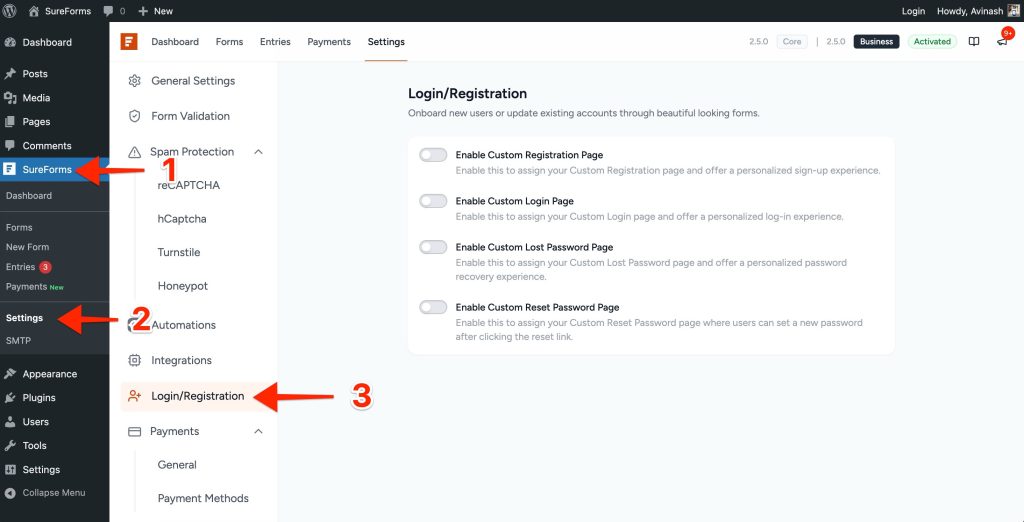
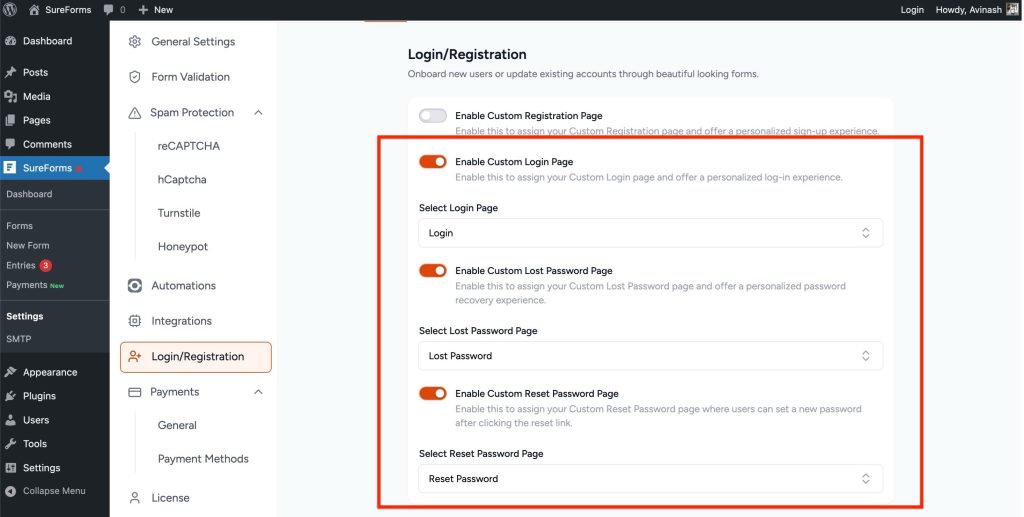
- Set the Login Page.
- Enable Custom Lost Password Page.
- Select the page where you will embed the Lost Password form.
- Enable Custom Reset Password Page.
- Select the page where you will embed the Reset Password form.
Step 2: Create the Lost Password Form
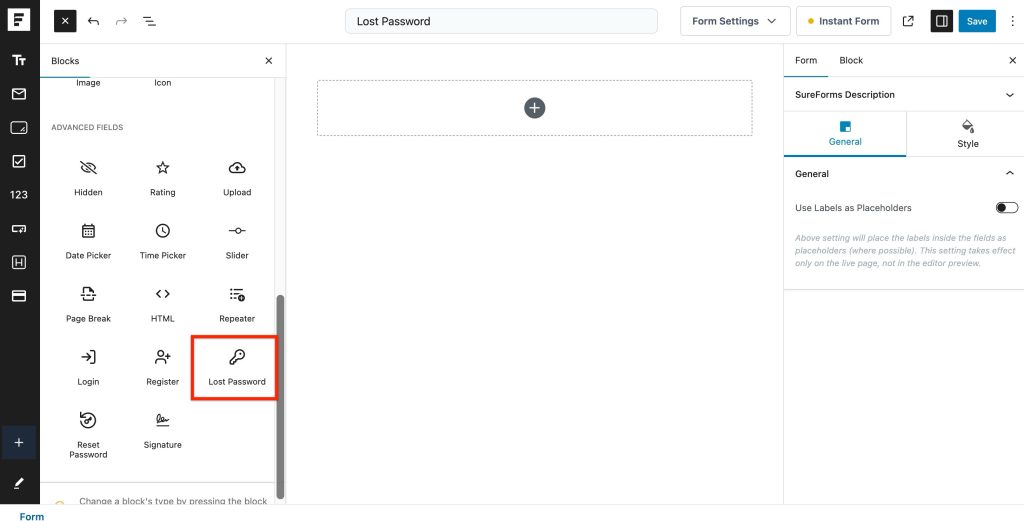
- Go to SureForms → Forms.
- Click Add New Form.
- Click the Plus (+) icon.
- Drag and drop the Lost Password field into the form.
Lost Password Field Options
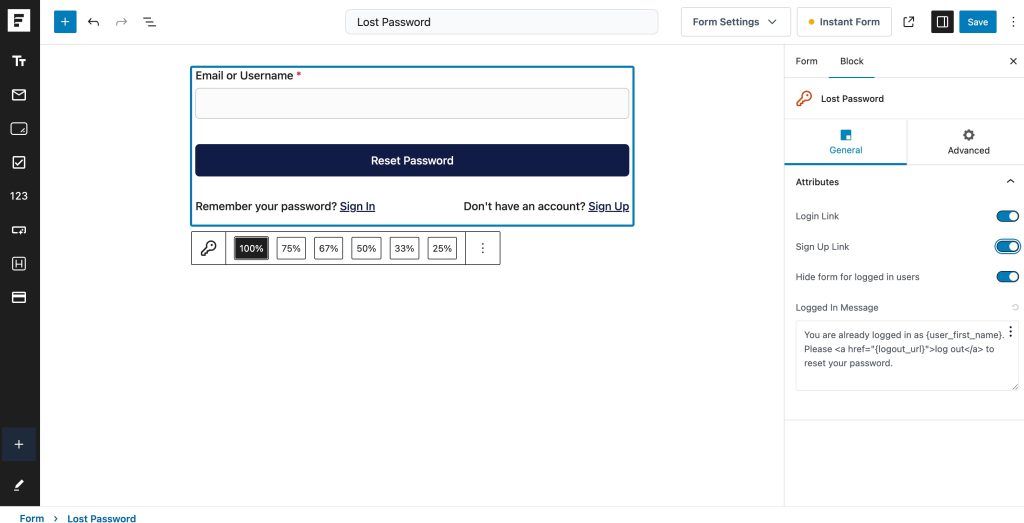
The Lost Password field includes:
- Login Link
- Sign Up Link
- Hide form for logged in users
- Save the form.
- Embed this form on the Lost Password page you selected earlier.
Configure Lost Password Email Notification
With the Lost Password form, you can configure the email notification that is sent to users when they request a password reset.
How to Configure the Email Notification
- Go to Form Settings > Email Notification.
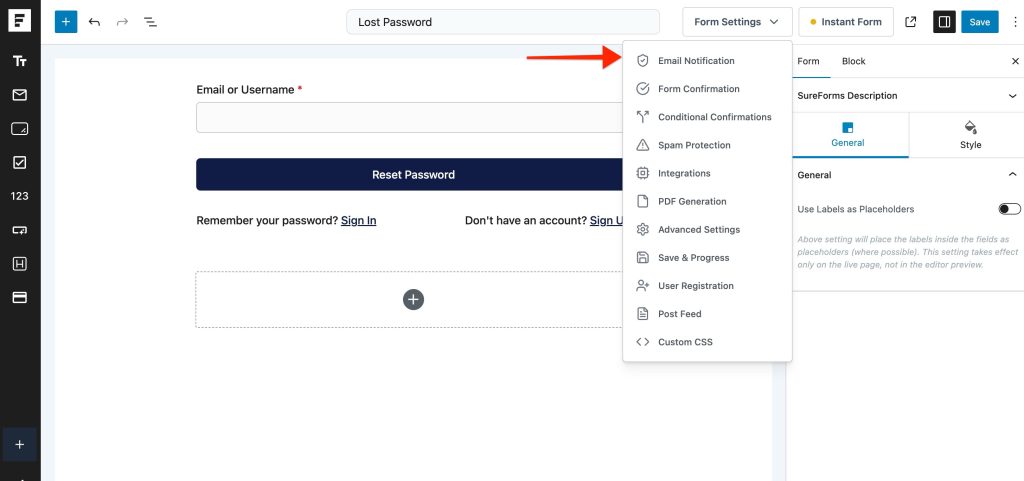
- Set up Email Notifications
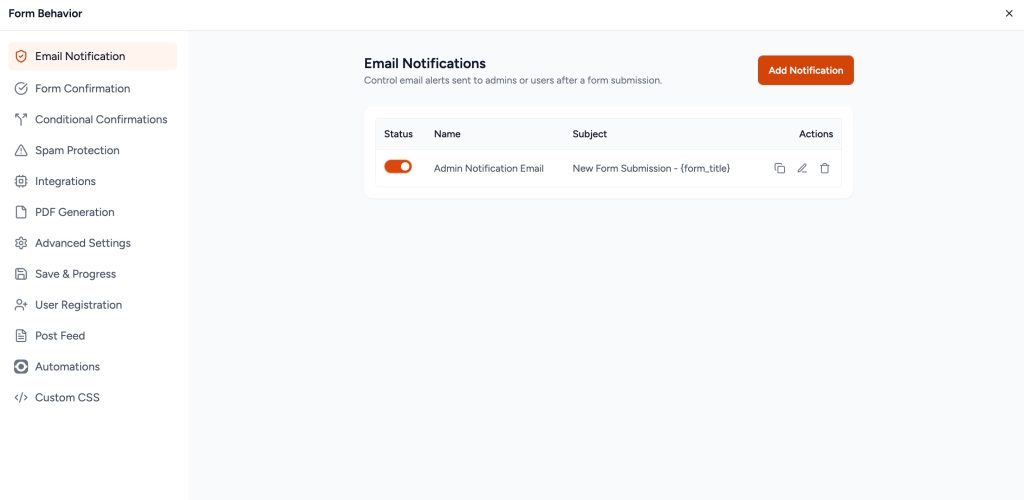
Add Reset Password Link Using Smart Codes
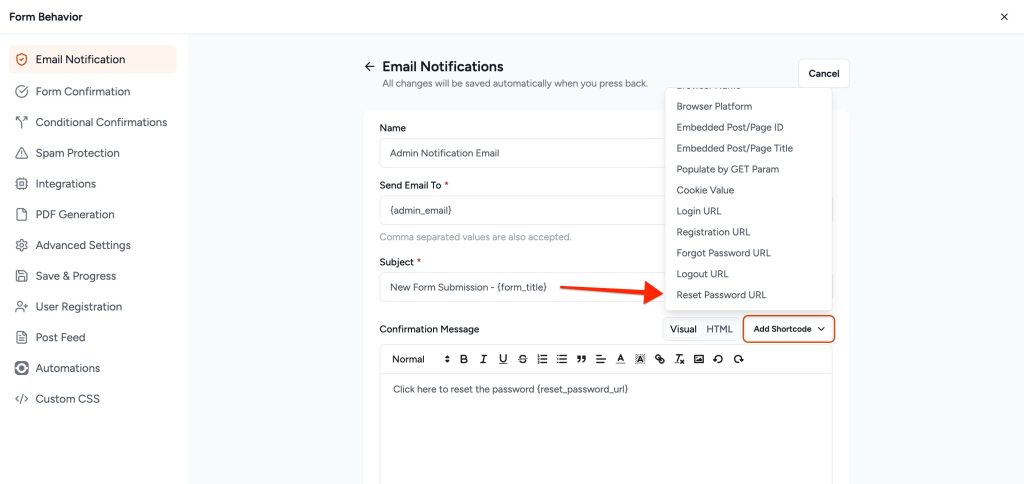
SureForms provides a smart code that automatically generates the password reset link.
- In the email message editor, click Add Smart Code.
- Select Reset Password URL from the drop-down.
- Insert it into the Confirmation Message.
Example Email Message
You can customize the email message like this: Click here to reset your password: reset_password_url
This smart code ensures that:
- Each user receives a unique reset password link
- The link securely redirects the user to the Reset Password page
Once configured, save the form. The reset password URL will be automatically sent to users when they submit the Lost Password form.
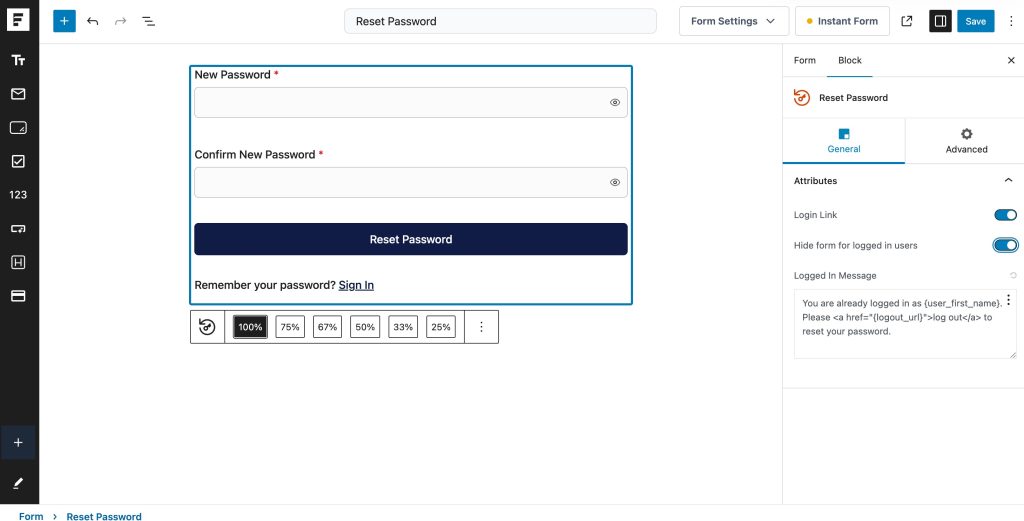
Step 3: Create the Reset Password Form
- Go to SureForms → Forms.
- Click Add New Form.
- Drag and drop the Reset Password field into the form.
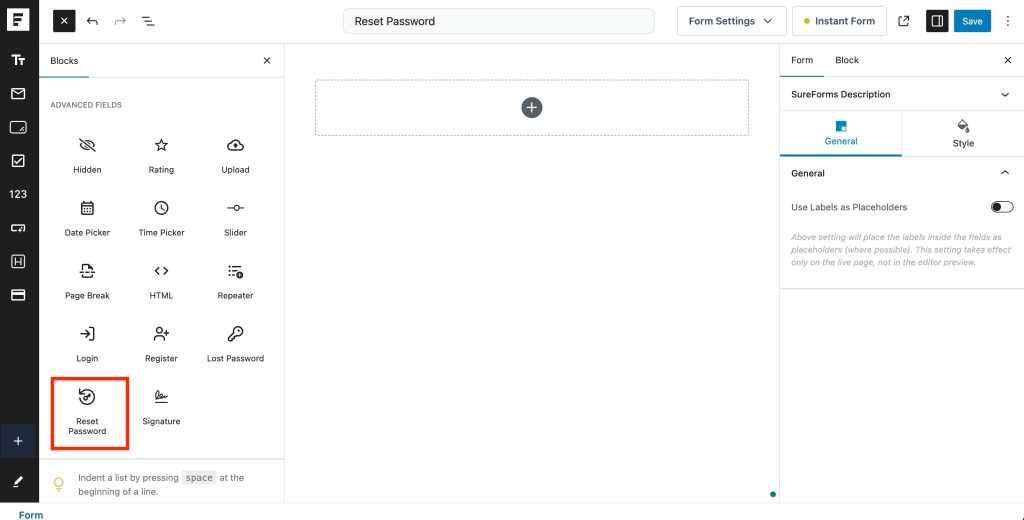
Reset Password Field Options
The Reset Password form includes:
- Login Link
- Hide form for logged in users
Step 4: Configure Redirect & Confirmation
After a successful password reset, you can:
- Redirect users to the Login page
- Redirect users to the Homepage
- Show a custom confirmation message
Example confirmation message: Your password has been reset successfully. Please log in using your new password.
- Save the form.
- Embed this form on the Reset Password page you selected earlier.
How the Flow Works for Users
From the Login Page
- User opens the Login form created using SureForms.
- User clicks Forgot Password.
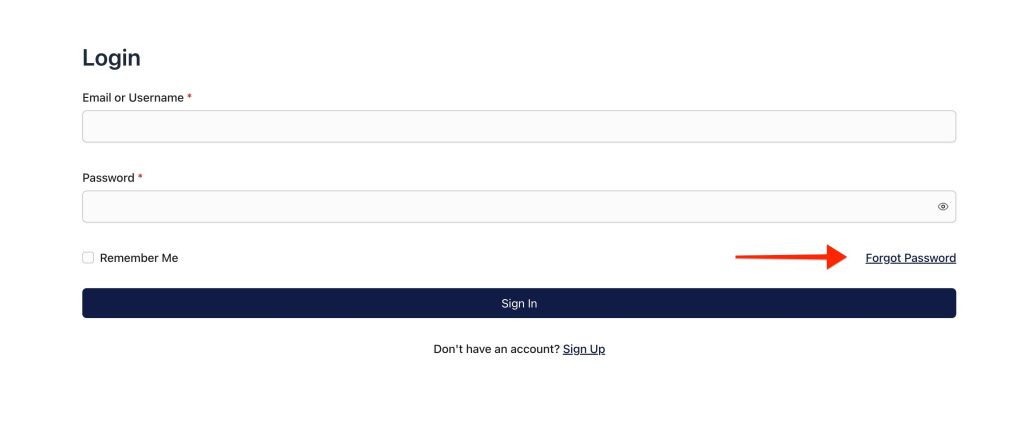
- User is redirected to the Lost Password page.
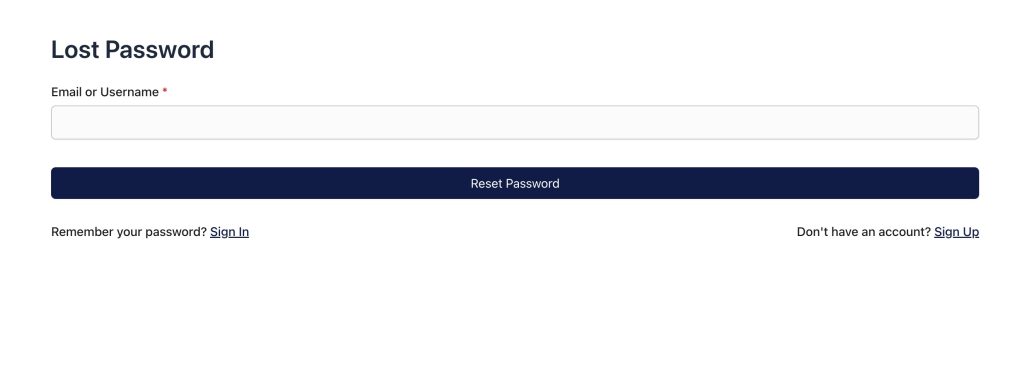
- User enters their email or username.
If an incorrect email or username is entered, a validation message appears:
No account found with this username or email.
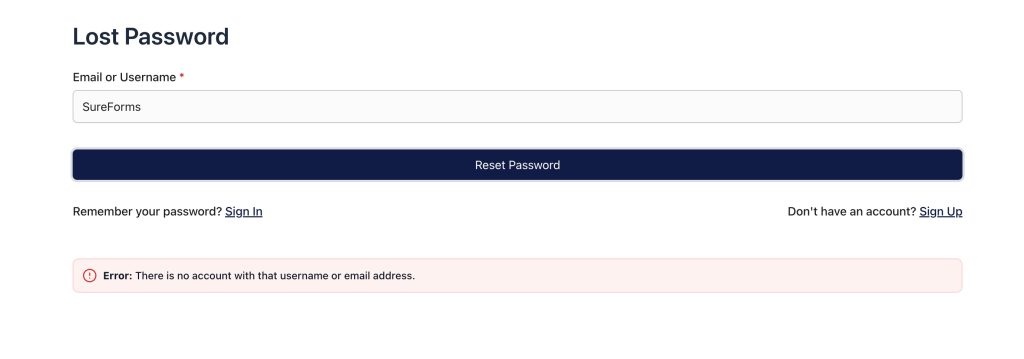
- User clicks Reset Password.
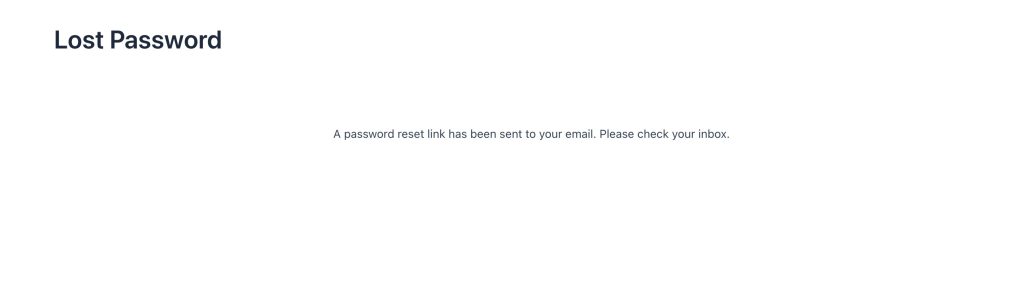
- A confirmation message appears:
A password reset link has been sent to your email. Please check your inbox.
From the Email
- User receives an email with a password reset link.
- User clicks the link.
- User is redirected to the Reset Password page.
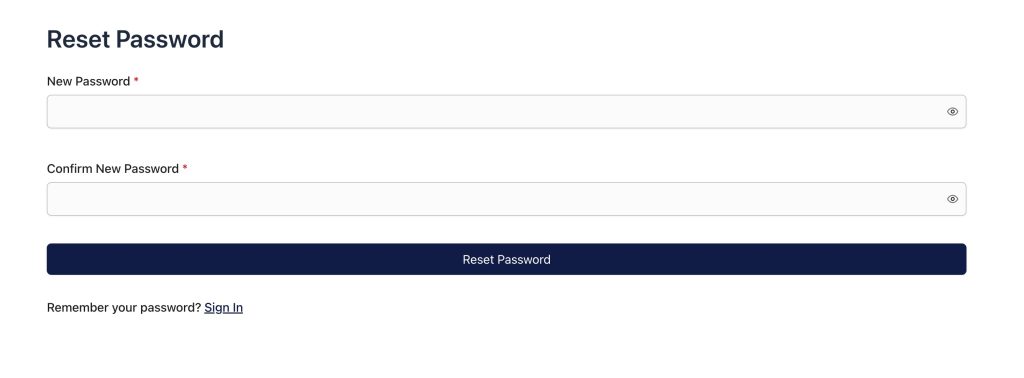
- User enters:
- New Password
- Confirm Password
- User submits the form.
Final Result
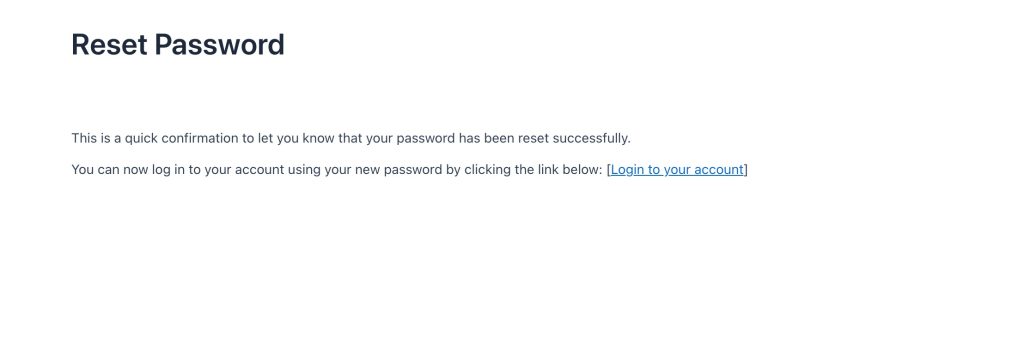
- Password is reset successfully
- User sees the confirmation message
- User is redirected based on page configuration (Login page or Homepage)
You can also customize the email confirmation message sent to users after the password is reset.
Summary
Using SureForms Lost Password and Reset Password blocks, you can fully control:
- Design of password recovery pages
- User experience during password reset
- Validation and confirmation messages
- Redirect behavior after password reset
This removes dependency on the default WordPress lost password page and provides a smooth, branded login experience.
We don't respond to the article feedback, we use it to improve our support content.